You probably didn't notice. That's kind of the point. But there are a few things worth knowing about what changed, and why it matters going forward.
Why rewrite at all?
The previous backend was Python-based and did the job well. But as LinkaGoGo moved beyond the web — first to iPhone, then to Android — we started running into friction. Each new platform needed the same logic: authenticate the user, fetch bookmarks, handle folders, manage subscriptions. Maintaining that logic across multiple codebases is where things quietly get expensive and error-prone.
Go gave us a path to a single, self-contained binary that can run anywhere: on a server for the web app, embedded in a build pipeline for the mobile apps, or compiled for any platform we might want to support in the future.
The same engine everywhere
The interface — what you see and tap — was already the same code across all three platforms. The engine underneath it wasn't.
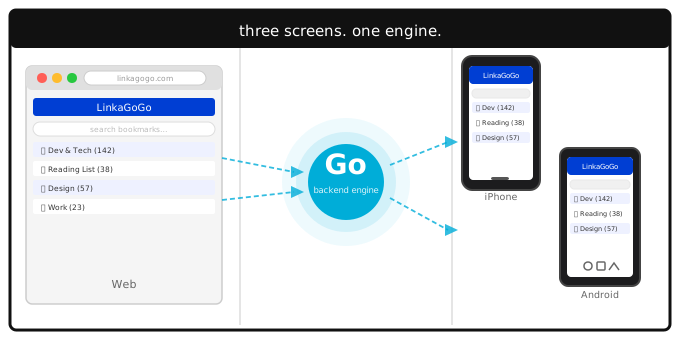
The bookmark engine — the core logic that powers search, folder management, dead link detection, reminders, and everything else — is now the same code running on all three platforms.
When you save a bookmark on your iPhone, the same engine handles it as when you save one on the web. When you reorganize folders on Android, it's the same logic. There's no "mobile version" of the app with slightly different behavior, no subtle inconsistencies between platforms, no bugs that only appear on one device.
What this means for reliability
Go compiles to a single binary with no runtime dependencies. The server starts in milliseconds, uses a fraction of the memory the Python backend required, and handles many more concurrent requests on the same hardware. For most users that's invisible — but it means the service is more resilient under load and leaves more headroom as we grow.
The Go backend also catches a whole class of bugs at compile time that would only surface at runtime in Python. Type mismatches, missing fields, incorrect API calls — the compiler rejects them before any code ships. Fewer surprises in production.
What didn't change
Your bookmarks, your folders, your tags, your history — all of it is untouched. The database is the same. The API is the same. The web interface is the same. From your perspective, nothing changed except things got a bit faster and more reliable.
Mobile: iPhone and Android
The iPhone app launched in May. The Android app followed shortly after. Both are free to download and support all subscription tiers — Plus and Premium features work exactly as they do on the web.
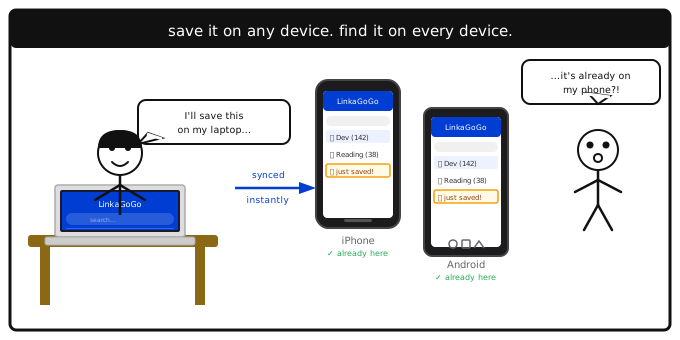
The Share Extension on both platforms lets you save a page directly from Safari or Chrome with a single tap. No copying URLs, no switching apps. You bookmark it where you are, and it appears in your account instantly.
What's next
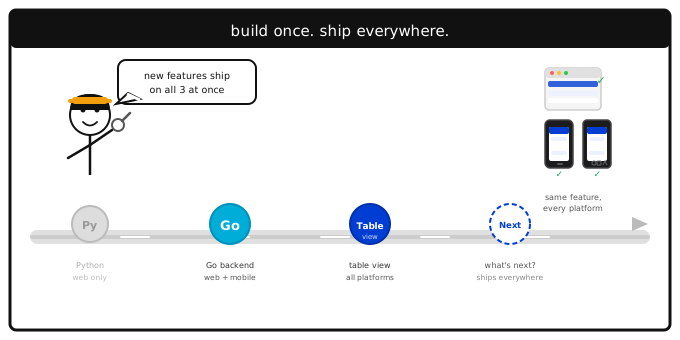
Having one engine across all platforms means new features ship everywhere at once. If we add something to search, it works the same on the web, on iPhone, and on Android — not "coming soon to mobile." The table view that shipped last month is a good example: it was built once and works across all form factors.
We're continuing to improve all three platforms. If you run into anything or have a feature you'd like to see, get in touch.