
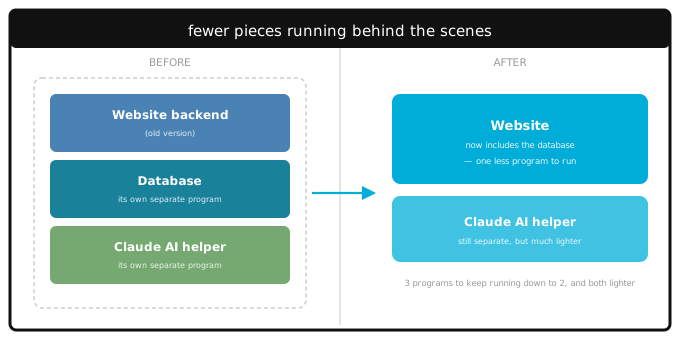
Over the summer we finished simplifying things. The old Python backend that used to serve the website is retired. The database has moved to something much simpler than before. And the small server behind our Claude AI integration got rebuilt too — it's still its own separate process, but a far lighter one.
Put together, LinkaGoGo now runs on noticeably fewer moving parts than it did a few months ago.
Why this matters to you, not just to us
It's tempting to write these posts purely as engineering trivia, but the real reason we do this work is that it shows up in three concrete ways for anyone using LinkaGoGo:
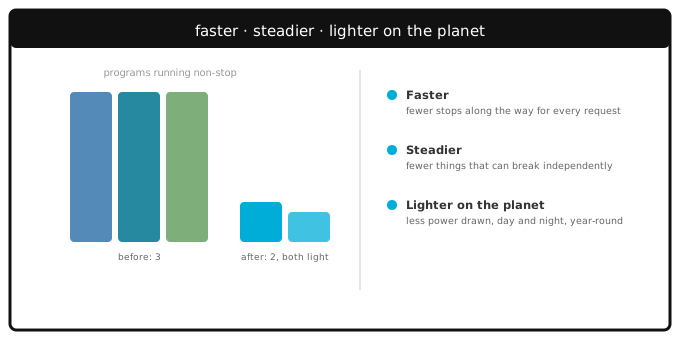
Faster. Every extra piece of software a request has to pass through — a separate database server, a separate service for a single feature — adds a little delay. Cut the number of pieces down, and things simply respond quicker. Loading your bookmarks, searching, saving a new link — all of it has less distance to travel.
Steadier. Every process is one more thing that can hiccup, run out of memory, or need a restart. Fewer processes means fewer independent things that can go wrong, and fewer places for a bug to hide. A simpler system is a more predictable one.
Lighter on the planet. LinkaGoGo runs 24 hours a day, every day, whether anyone's actively using it or not. Every process we no longer need to keep alive is memory and processing power we're no longer drawing power for, around the clock. It's a small thing multiplied by a lot of hours — but it adds up, and it means a smaller server can comfortably do the job.
What actually changed
For the curious, here's the short version without the jargon.
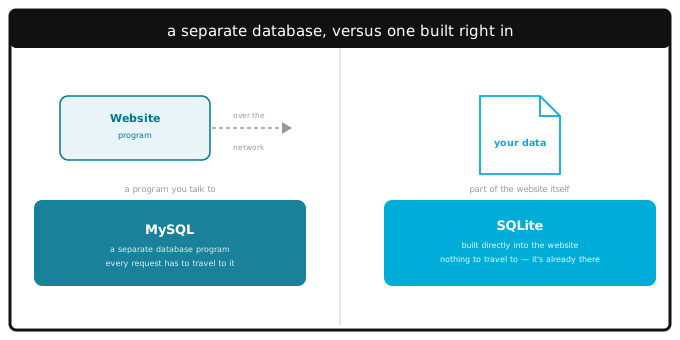
The database — the place all your bookmarks, folders, and tags actually live — used to be MySQL, a separate piece of software running alongside the website itself. It's now been replaced with something that lives directly inside the same program that serves the website, instead of being a separate thing it has to talk to over the network. One less thing running, one less hop for every request to make.
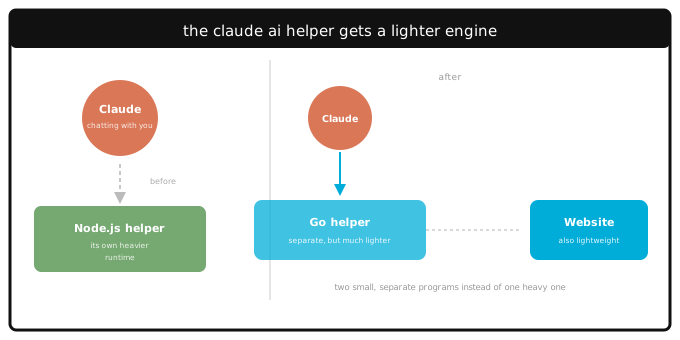
The Claude AI integration — the part that lets you manage bookmarks by chatting with Claude — used to run as its own Node.js service. We've rebuilt it in the same language as the rest of the backend. It's still a separate, independent process from the main website (and will stay that way), but it's now a much lighter one, sharing the same well-tested bookmark logic instead of duplicating it.
What didn't change
Same as last time: your bookmarks, your folders, your tags, your history, the API, the mobile apps — none of it changed from your side. If you use LinkaGoGo through the web, the browser extensions, the iPhone or Android apps, or through Claude, everything works exactly as it did. It should just feel a little snappier.
If you notice anything that seems off, we'd genuinely like to know — email [email protected] and we'll look into it right away.