
2001: A server under the desk
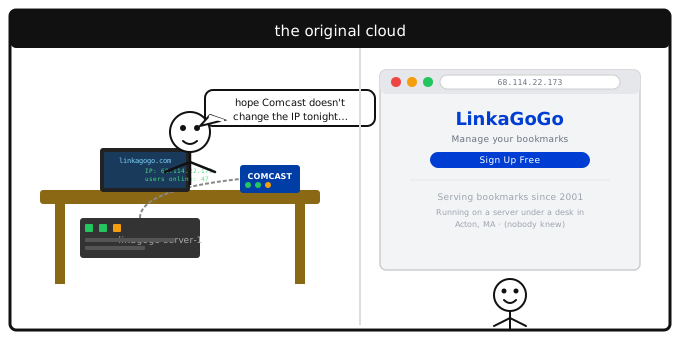
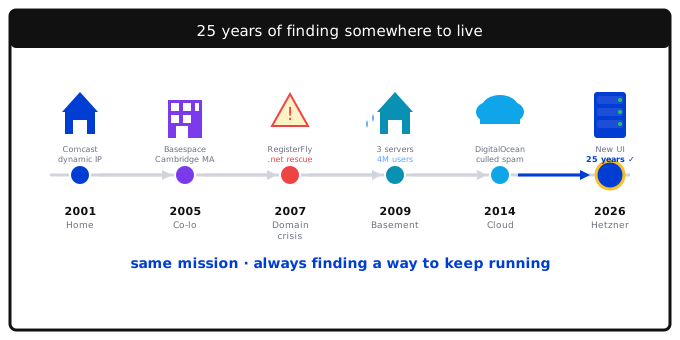
LinkaGoGo launched in May 2001 from a machine literally sitting under a desk at home, connected to the internet over a Comcast residential cable line. The IP address was dynamic — meaning it could change without warning whenever Comcast felt like it. The solution was a DNS updater that watched for changes and pushed updates to the domain record. It worked, mostly.
There was no uptime guarantee. If the power went out, the site went down. But it ran. People found it, signed up, and started saving bookmarks.
2005: First move — Basespace co-location
After a few years of running from the living room, LinkaGoGo moved its server to a proper co-location facility: Basespace.net in Cambridge, MA. The server got a static IP, a proper rack mount, and a real data center connection. Uptime improved considerably. No more crossing fingers during thunderstorms.
For a few years, this worked well. The site grew steadily.
2007: The RegisterFly debacle
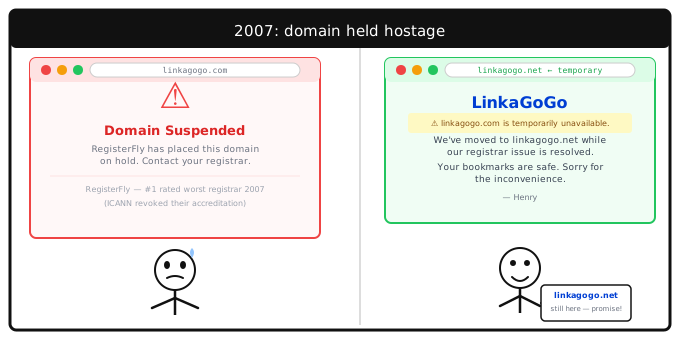
In early 2007, the domain registrar RegisterFly collapsed spectacularly. ICANN launched an investigation, eventually revoking their accreditation — but not before thousands of domains were left in limbo, transfers blocked, renewals failing, and support completely unresponsive.
LinkagGogo.com was one of them. For weeks, the domain was inaccessible — suspended by a registrar that had effectively ceased to function. There was no quick fix; the official transfer process took time and bureaucracy that the situation didn't allow for.
The temporary solution: linkagogo.net. A notice went out to users explaining the situation, DNS was pointed at the same servers, and the site kept running while the .com domain was eventually recovered through ICANN's dispute process. It was stressful, but it worked. Every bookmark survived.
2008–2009: AddThis, four million users, and an exit from co-lo
Around 2008, social bookmarking exploded. Services like AddThis started putting share buttons on millions of websites, and LinkaGoGo was one of the destinations. Traffic surged. User registrations climbed. At the peak: four million registered users and more than a billion bookmarks in the database.
Basespace noticed. The traffic LinkaGoGo was generating was beyond what a single co-located server was supposed to be doing, and the pressure to upgrade — or leave — became clear. The economics didn't favor staying.
The solution, improbable as it sounds, was to move back home — this time to the basement, with three servers.
2009–2014: The basement data center (and the flood)
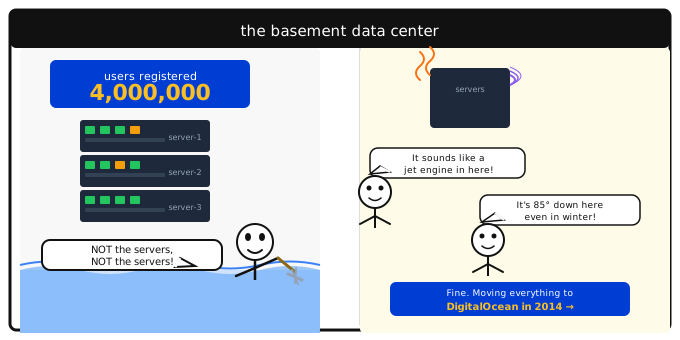
Three servers in a basement sounds like a joke. It wasn't. The machines were properly racked, cooling was managed, and the internet connection had been upgraded significantly. For a few years it held up.
Then the basement flooded.
A combination of heavy rain and a drainage issue meant water came in faster than it could go out. The servers survived — barely — because they were elevated and the water didn't quite reach them. It was close. Standing there with a mop, watching the waterline, and trying to decide whether to pull the plug or trust the setup: that's not a moment you forget.
The servers kept running. The bookmarks stayed safe. But after that incident, "move it back to a real data center" moved to the top of the list. It just took a few more years, because the other motivating factor was closer to home: the constant noise and heat the machines generated made them deeply unpopular with everyone else in the house.
2014: DigitalOcean, and cleaning up four million users
By 2014, the combination of flood risk and family objections made the decision for us. LinkaGoGo moved to DigitalOcean.
The migration wasn't just a server move. The social bookmarking boom had also brought in a massive amount of spam — fake accounts, bot registrations, accounts that had never done anything real. Moving to the cloud was an opportunity to cull the database: analyze activity, identify genuine users, and clean out everything else. The four million users became a much smaller, much more real number. The database got fast again.
DigitalOcean (New York) served LinkaGoGo well for over a decade.
2026: Hetzner, and a completely new interface
This year, LinkaGoGo moved again — this time to Hetzner (Virginia), where it now runs on faster hardware with more headroom. The migration coincided with a complete rewrite of the frontend and backend: new interface, new search, AI features, MCP integration for AI assistants, public profiles, and more.
The database is faster than it's ever been. The interface works properly on mobile. There are browser extensions for Chrome, Firefox, Safari, and Edge.
What 25 years actually means
A lot of bookmark managers have come and gone in that time. Delicious was acquired and abandoned. Google Bookmarks launched and quietly disappeared. Pocket became a feature inside Firefox. Each time, users were left scrambling to export their data and find somewhere else to go.
LinkaGoGo is still here. Not because it had venture capital or a growth team or a viral moment — but because it never needed those things to keep running. It solved a real problem for real people, and it kept running through every infrastructure move, every domain disaster, every flooded basement.
If you've been a user since the early days: thank you. If you're new: welcome to a service that's been quietly doing this since Netscape was still a thing.
Here's to the next 25.